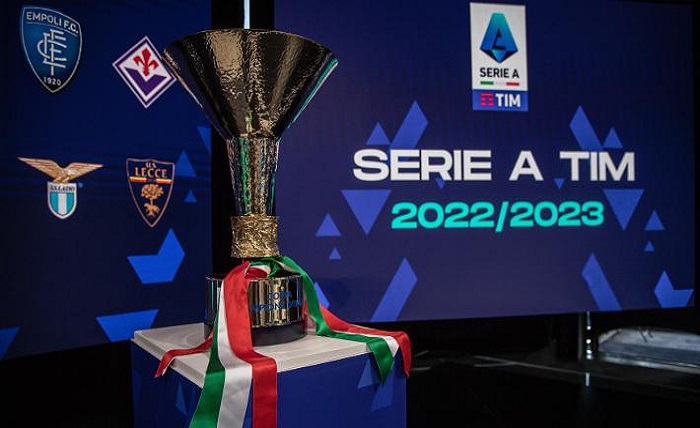
In football betting, fame rarely equals profit. The 2022/2023 Serie A season illustrated that public popularity and betting profitability often move in opposite directions. Teams carrying global recognition consistently drew heavy action, while disciplined but underappreciated sides quietly generated long-term yield. To a bettor focused on probability over prestige, this divergence offered crucial insight into market behavior, tactical reliability, and price discipline.
Why “Famous” Clubs Often Lose Value in Betting Markets
High-profile teams like Juventus, Milan, and Inter naturally attract emotional money, inflating their odds into unfavorable ranges for consistent bettors. Market expectations priced these teams as perpetual favorites, regardless of context or fatigue. As a result, even when these clubs won matches, the payout rarely justified the long-term risk.
In 2022/2023, Juventus and Milan demonstrated this phenomenon. Both frequently won by narrow margins or underperformed relative to metrics like expected goals (xG), causing “win–no-cover” scenarios across handicap markets.
Profitable Teams and Statistical Overperformance
Conversely, clubs with lower market attention—such as Monza, Bologna, and Empoli—delivered value by outperforming implied odds without triggering public hype. This success wasn’t accidental. It reflected analytical traits: compact systems, disciplined game-state management, and physical consistency amid tight scheduling.
| Category | Examples | Seasonal ROI in Asian Odds | Notes |
| Overvalued big clubs | Juventus, Milan, Inter | -6% to -10% | Market saturation reduced returns |
| Profitable underdogs | Monza, Bologna, Empoli | +8% to +11% | Tactical balance and public neglect |
| High-variance sides | Atalanta, Napoli | ±3% | Value fluctuated with form cycles |
From this breakdown, profitability correlated less with dominance and more with structural underestimation—precisely where bettors could extract sustainable advantage.
How Market Perception Creates Mispricing
Perception bias drives the divide between “famous” and “profitable.” Bettors reacting to reputation anchor on outdated narratives—historic titles, European pedigree, or celebrity managers. But price movement responds to liquidity, not credibility. When heavy volume accumulates on big names, bookmakers hedge exposure by lowering odds, eroding their risk–reward ratio.
Mechanism Behind Mispricing
- Public weight inflates odds for favorites and suppresses them for competent underdogs.
- Price correction often arrives late in the cycle—post momentum display, when value vanishes.
- Contrarian bettors entering earlier positions achieve higher expected return per unit.
Understanding these timing dynamics separates emotional fandom from strategic positioning.
Spotting Value Through Situational Analysis
Certain game structures repeatedly reward bettors who remove brand bias. Monza and Bologna, for instance, specialized in tactical containment and counter-attack efficiency—systems prone to underestimation against legacy clubs.
Ideal conditions signaling hidden value included:
- Short-term form stability within three matches.
- Opponents on continental rotation schedules.
- Historical undervaluation in midweek fixtures due to liquidity skew.
Each condition magnified inefficiency, increasing payout probability beyond market equilibrium.
Testing Efficiency Through UFABET Market Patterns
In live betting ecosystems, behavioral imbalance amplifies around high-attention games. When analyzed through ufabet168, bettors see how betting flows distort probability during prime Serie A fixtures. The sports betting service’s dynamic charts often capture early price compression around big clubs, revealing limited upside. By contrast, matches featuring mid-table sides remain statistically purer, as liquidity flows stay closer to true odds. Recognizing this structural divide helps strategic bettors filter hype-driven inefficiency from measurable opportunity, preserving long-term profitability through data-grounded selectivity.
Tactical Consistency and the “Money Team” Profile
True “money teams” share measurable features beyond luck: consistent pressing identity, replication of chance creation models, and resistance to psychological swings after conceding. Bologna, for example, displayed one of the highest xG-to-result alignment rates, signaling reliability for sustained profit across neutral fixtures. In contrast, glamorous yet volatile sides like Napoli offered intermittent dominance but inconsistent betting returns due to sharp odds compression post-title contention.
Validation Through casino online Market Synchronization
Integrating multi-source pricing through analytical engines hosted within casino online systems provides further insight. These casino online website aggregators show that profitable Serie A bettors didn’t chase single-brand markets but instead cross-checked live spreads to ensure fair-value entry points. Disparities exceeding 0.15 in implied probability between bookmakers often indicated exploitable inefficiencies—especially when public emotion anchored heavily on reputation. Such cross-system synchronization helps prevent overexposure to distorted sentiment lines, ensuring data, not persona, drives entry precision.
When Big Clubs Still Provide Value
While most public favorites lose long-term efficiency, exceptions emerge during overcorrection phases—particularly following short slumps. Inter and Milan both offered occasional value rebounds after public confidence dipped too sharply. Timing mattered more than allegiance. Disciplined bettors bought undervalued rebounds, not name loyalty, proving that even elite clubs can become profitable—once perception resets below analytical expectation.
Summary
The 2022/2023 Serie A season underscored a permanent truth: fame attracts speculation, not profit. Market inflation around household clubs consistently undercut bettors chasing familiarity. Meanwhile, tactically sound, underappreciated sides provided the most stable returns through structural undervaluation and strategic discipline. For bettors, the distinction between recognition and reward lies in resisting narrative gravity—treating reputation as noise, not guidance. In the long game, “money teams” aren’t the ones lifting trophies, but those consistently mispriced against their real probability curve.