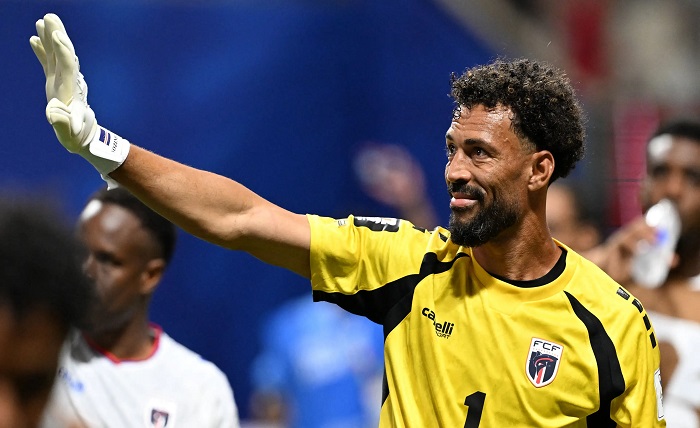
Goalkeeper form in the 2016/17 Serie A season acted as a hidden filter on every shot: the same chance against a top keeper and against a struggling one did not carry the same likelihood of ending in the net. With league-wide goal output near three per game, the difference between shot and goal often came down to how consistently each club’s number one turned expected goals on target into actual saves.
Why Goalkeeper Form Is A Distinct Variable From Team Defence
Defensive quality and goalkeeper form overlap but are not identical. A strong back line can limit shot volume and force attempts from poor angles, lowering overall scoring even if the keeper is merely average, while an elite goalkeeper can keep a vulnerable defence afloat by saving more than the modelled expectation of the shots he faces. Modern frameworks describe this using post‑shot expected goals (psxG) and “goals prevented,” which compare the quality of shots on target to the goals actually conceded; large positive values point to keepers who turned likely goals into saves, while negative values flag those who underperformed.
In a 2016/17 context, that means evaluating goalkeepers separately from their teams’ reputations. A mid-table side with a high‑performing keeper could still keep scores down even when conceding many attempts, while a big club with a weaker keeper might allow ordinary shots to become goals more often than their status suggests. Treating “defence” as a single number misses that extra gate between shot and goal.
Core Statistical Signals Of Goalkeeper Form
Serious analysis relies on data beyond simple goals conceded. Even for historic seasons, it is possible to reconstruct key indicators using saves, save percentage, shots on target faced and, where available, advanced metrics like goals prevented. These statistics give a more nuanced view of how likely a goalkeeper is to turn a shot into a save, once the defence in front of him has already failed to block the attempt.
Useful signals include:
- Save percentage: proportion of shots on target stopped; high values suggest either strong form or easier shots faced, so they need context.
- Goals conceded versus shot volume: a keeper facing many shots but conceding relatively few suggests better-than-average stopping ability, especially when models confirm he prevented more goals than expected.
- Clean sheet rate: not just a team metric but a proxy for how often the keeper, defence and game state combined to “zero out” opponents.
When these indicators point in the same direction—high save percentage, strong goals-prevented numbers, solid clean sheet rate—the underlying probability that any given shot turns into a goal shifts downward. The opposite alignment suggests a keeper whose form inflates conversion rates for opposing attackers.
Mechanism: How Goalkeeper Form Changes Shot–Goal Outcomes
From a probabilistic standpoint, every shot’s path can be separated into two stages: first, whether it becomes a shot on target; second, whether that shot beats the goalkeeper. Player shot markets focus on the first step, while goals and anytime scorer markets depend heavily on the second. Goalkeeper form lives almost entirely in that second stage: a high‑form keeper reduces the conditional probability that a shot on target becomes a goal, while a low‑form one raises it compared with league average.
Comparing An In-Form Keeper To A Struggling One
Imagine two Serie A fixtures with similar shot profiles—each home side allows eight shots on target. Against an in‑form keeper whose recent record and goals‑prevented metrics indicate strong performance, you might expect only one or two of those shots to become goals on average. Against a struggling keeper with poor save percentage and negative goals‑prevented differential, three or more goals from the same shot volume becomes plausible. For bettors, that difference matters most when pricing overs, anytime scorers and correct scores, even if bookmakers do not explicitly show a “goalkeeper form” adjustment on the coupon.
Using Goalkeeper Form In Pre-Match Shot And Goal Markets
Before kick‑off, goalkeeper form can be systematically incorporated into pre‑match reads rather than treated as a narrative detail. Historical stats for Serie A seasons allow you to see how often specific keepers conceded more or fewer goals than expected given shots faced, and how this trend evolved over a campaign. When that pattern aligns with an opponent that generates high shot volume, especially on target, the conditional probability that those shots turn into goals is meaningfully affected.
In practical terms, this means:
- Tilting overs and opposing-team scorer bets slightly upward when an historically underperforming goalkeeper faces a strong attack that reliably hits the target.
- Tempering enthusiasm for overs and aggressive goal lines when a high-performing keeper, with positive goals‑prevented indicators, faces a team dependent on half-chances or long-range efforts.
The goal is not to override base xG models but to refine them at the last step—between shot and goal—using evidence of goalkeeping over- or under-performance.
Live Game Reading: Adjusting Expectations As The Keeper Shows His Level
In-play, the perception of goalkeeper form can change quickly when a few key moments highlight either confidence or fragility. Even without real-time advanced metrics, live shots‑on‑target and save sequences provide signals: repeated clean catches, assertive claims on crosses and sharp 1v1 stops reinforce an impression of a keeper “seeing the ball well,” while spilled shots, parried balls into dangerous zones and hesitant positioning suggest a higher chance that future efforts will go in.
For Serie A live betting, this matters in two main ways:
- When a previously average keeper produces several high‑quality saves early, you might downgrade the likelihood that routine shots will beat him for the rest of the match, making aggressive late overs less attractive unless game state forces wild, high‑quality chances.
- When a keeper looks shaky, especially under pressure or on crosses, the effective conversion rate of shots on target rises, justifying smaller, tactical positions on overs, comeback odds or next‑goal markets, provided the defence continues to allow efforts.
The key is to combine this visual and statistical impression with pre‑match data, rather than letting a single spectacular save or error dominate your read.
Integrating Goalkeeper Form With A Structured Betting Platform
Turning these insights into wagers depends on the flexibility of the betting environment you use. A modern web-based service that offers Serie A shots, goals and scorer markets allows you to align stake sizes and bet types with your goalkeeper-informed probabilities: shading toward shots-on-target overs when a defence allows volume but employs a strong stopper, or prioritising scorer and team-goal markets when a weak goalkeeper is likely to turn average shooting into goals. When using a service like พนันบอล, the analytical question becomes whether its Serie A menu and interface make this mapping straightforward: can you quickly see and select lines for shots and goals that reflect your adjusted view, or are you constrained to generic totals where goalkeeper nuance is harder to exploit?
Where Goalkeeper Form Can Mislead Bettors
Despite its importance, goalkeeper form is one of the easiest variables to over-interpret. Sample sizes for save percentage and goals prevented in a single season are modest, and a handful of extraordinary games—penalty saves, deflections, or matches where the defence limited shot quality—can make a keeper look better or worse than his true ability. Additionally, save percentage is heavily influenced by the type of shots faced; a keeper behind a structured defence may look elite simply because most attempts are from poor positions, while another behind a chaotic back line faces a constant stream of high‑probability chances that depress his numbers unfairly.
For bettors, the risk is using headline stats without correcting for shot profile. If you treat an overworked keeper with respectable numbers as “bad” or a sheltered one as “world-class,” you may push your shot–goal probabilities in the wrong direction. The safer approach is to treat goalkeeper form as a secondary, refining factor layered on top of team xG, shot maps and tactical context, rather than as a sole driver of goal projections.
Summary
In Serie A 2016/17, goalkeeper form acted as the final gate between shot and goal, sometimes preserving narrow wins for under-pressure sides and sometimes turning ordinary efforts into decisive strikes. By separating team defence from individual keeper performance, using metrics like save percentage, goals prevented and clean sheets, and integrating those signals into both pre‑match and in‑play decisions, bettors could refine the implied probability that any given shot would result in a goal rather than a save. When used as a disciplined, context-aware adjustment—rather than an excuse to overreact to a few highlight saves or mistakes—goalkeeper analysis became a practical way to sharpen totals, scorer markets and live bets without abandoning the broader statistical picture of each Serie A fixture.